
Contents
06 Apr 2026 • 11 minutes
Safe, Efficient, Effective: The Case for Hybrid-Testing 800V Battery Stacks
A whitepaper exploring hybrid testing strategies for validating 800V battery management systems (BMS). Learn how combining series and parallel simulation with modular HIL architectures reduces cost, improves safety, and scales efficiently for EV platforms
Introduction
Electrification—with high-voltage storage and conversion technologies—is reshaping industries from automotive and aerospace to medical technology. The rapid adoption of advanced battery technologies introduces new testing challenges, particularly for Battery Management Systems (BMS). As these electrified powertrain architectures evolve toward 800V and beyond, new test approaches are needed.
This whitepaper details strategies for scaling high-voltage battery management testing safely and cost-effectively. We will explore how a hybrid-testing approach, combining traditional with budget and complexity tailored testing methods, allows test engineers to validate 800V+ systems while managing capital expenditure (CapEx) and enhancing operator safety. By leveraging modular, hardware-in-the-loop (HIL) strategies with high-current battery cell channel simulators, organizations can reduce hardware channel counts, minimize test system footprints, and adapt to the increasing complexity of modern EV platforms without compromising test rigor.
The State of EV Battery Management Testing
According to the International Energy Agency, automotive EV sales are on an upward trajectory and are projected to account for over 20 million units annually by 2030. The aerospace sector is investing heavily in electrified aircraft, including unmanned aerial vehicles (UAVs), electric vertical takeoff and landing (eVTOL) aircraft, and hybrid-electric regional planes leveraging high-voltage (up to 800 V) battery stacks to reduce weight, extend range, and meet stringent safety and certification standards. At the same time, the medical industry is continually developing new battery-powered devices, including portable diagnostic equipment, wheelchairs, and advanced prosthetics.
Amid this profound growth in electrification, the demand for longer range, faster charging, and better performance in EVs has driven the integration of sophisticated high-voltage architectures and advanced Battery Management Systems (BMS), which are critical for regulating charging, monitoring cell health, and performing cell balancing to optimize battery life and ensure safe operation.
Testing a BMS with a live high-voltage battery pack is impractical due to its inflexibility, hazards, and time-consuming nature. Testing with power supplies is expensive and demands a large footprint in the test setup. Consequently, HIL testing, which replaces the physical battery cells with electronic battery cell simulators, has become standard practice for validating BMS functionality safely and efficiently.
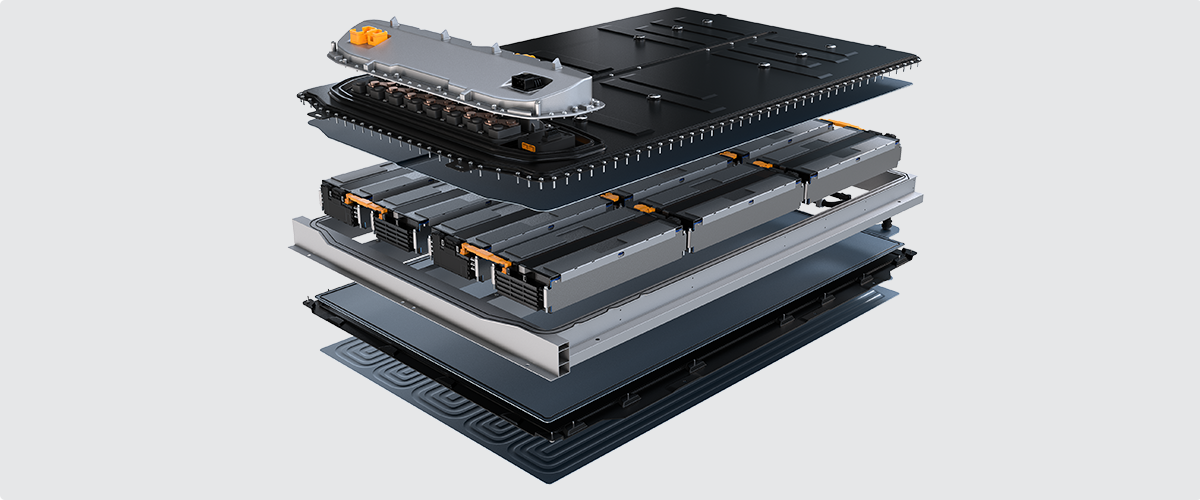
Figure 1 – Above, a typical battery pack for an EV.
Evolution to 800V Systems
- Faster Charging Capabilities: One of the primary motivators for transitioning to 800V systems is the ability to accelerate charging times. Higher voltage allows for increased power delivery without proportionally increasing the current, reducing the time required for a full recharge. This directly supports consumer demand for convenience and aligns with the growing infrastructure for ultra-fast charging stations.
- Improved Efficiency and Reduced Losses: Operating at higher voltages reduces resistive losses in electrical systems, as power losses are the root cause of charging speed limitations. By increasing voltage and decreasing current, 800V architectures significantly enhance overall energy efficiency, which is critical for achieving fast charging speeds and enabling the maximum vehicle range.
- Lightweighting and System Optimization: The reduced current in 800V systems enables thinner cables, smaller components in power electronics, and simpler battery cooling, all of which contribute to overall vehicle weight reduction. By optimizing the electrical architecture, manufacturers can achieve improved energy utilization and enhanced performance metrics, including acceleration and range.
- Compatibility with Performance Demands: The shift to 800V is particularly advantageous for high-performance electric vehicles, where optimizing power delivery is essential. The higher voltage system ensures that EVs can deliver sustained performance under demanding conditions while maintaining lower thermal stress on components.
- Alignment with Infrastructure Evolution: The rapid growth of the electrification market has accelerated advancements in charging technologies, including the deployment of charging infrastructure compatible with 800V systems. This alignment supports widespread adoption by ensuring that new EV platforms can capitalize on these emerging capabilities.
By doubling voltage levels, manufacturers achieve faster charging, reduced resistive losses, and improved efficiency, while enabling smaller and lighter components. This architectural shift supports the rapid expansion of high-performance EV platforms and aligns with ultra-fast charging infrastructure. However, testing at these elevated voltages introduces new layers of complexity, risk, and cost.
From 400V to 800V: A New Set of Challenges
The standard approach to BMS design verification and testing is to simulate every battery pack cell with an individual cell simulator. These tend to fall into two categories: low current (e.g., 300 mA) simulators are used for lower capacity pack BMSs plus the basic functional test of high-capacity pack BMS cell balancing. In contrast, high current (e.g., 5 A) simulators are used for the verification and testing of high-capacity pack BMSs, including cell charge and discharge cycles. While flexible and effective, this approach results in large, complex, and costly test systems, especially as pack voltages continue to rise.
- System Cost and Complexity: A one-to-one simulation for an 800V pack can require nearly 200 individual simulator channels. This approach exponentially increases hardware costs, cabling complexity, and the physical footprint of the test system. This challenges impact achievable performance and quality of the battery cell simulation.
- Economic and Budget Constraints: Test departments face increasing budget scrutiny as the BMS is often viewed as a commodity, placing a premium on economic efficiency. The CapEx required to build a large-scale, high-channel-count 800V tester using traditional methods is often prohibitive.
- Component and Supply Chain Variability: The semiconductor landscape for BMS components is complex, with a wide variety of cell chemistries and vendors. This variation requires flexible test systems that can adapt to different technical specifications without requiring significant reconfiguration.
- Benefits of Modular HIL Systems: Engineers require modular and upgradeable Hardware-in-the-Loop (HIL) systems for testing. This represents a shift away from expensive, monolithic test setups toward more scalable and adaptable solutions. Repurposing existing BMS test assets is a key strategy for extending the life of test systems and reducing CapEx.
- High-Voltage Safety Requirements: Test systems operating at 800V DC are subject to stringent safety regulations, and budget stresses are significantly different between 450V and 800V compliance voltage. This necessitates specialized training, equipment, and safety protocols, adding to the overall cost and complexity of the test environment.
Simply doubling the size of a 400V test system is no longer a feasible strategy. A more intelligent approach is needed to manage costs, complexity, and safety while ensuring comprehensive test coverage for battery packs exceeding 800V.
A Hybrid-Testing Approach to Battery Management
To address the challenges of high-voltage battery management testing, a flexible hybrid-testing methodology that combines series and parallel cell simulation within an open/industry-standard platform like PXI offers a significantly more cost-effective and scalable solution. This strategy leverages high-current battery simulators to reduce the total number of channels required, thereby lowering system cost and complexity.
The core of this approach is to simulate only a small portion of the battery pack using a one-to-one cell-to-simulator mapping, while the remaining cells are simulated in parallel.
- Series Simulation (one-to-one Mapping): A small group of cells, typically one or two battery pack modules, is simulated using individual battery cell simulator channels. This allows for granular testing of the Cell Module Controller (CMC), including precise cell balancing measurements and fault injection on individual cells.
- Parallel Simulation: The remaining cells in the battery stack are grouped and simulated in parallel using high-current battery cell simulator channels. A single high-current channel can provide enough power to simulate multiple cells simultaneously, including their balancing currents.
This hybrid-testing configuration allows engineers to validate the entire BMS—including the master Battery Management Controller (BMC) and individual CMCs—without needing a dedicated simulator channel for every cell in the pack.
Learn more about our PXI-based Battery Management System Tests
Example: Testing a 192-Cell, 800V Pack
Consider an 800V battery pack composed of 192 cells.
- A traditional one-to-one approach would require 192 simulator channels. Using standard 6-channel PXI modules, this would necessitate 32 modules housed in two large PXI chassis. The total stack voltage would exceed high-voltage safety limits, requiring extensive safety measures.
- A hybrid-testing series/parallel approach provides a more efficient solution. For instance, two modules of 12 cells each could be simulated in series (24 channels) for detailed CMC validation. The remaining 168 cells could be simulated in parallel using high-current simulator channels.
Using Pickering's PXI/PXIe 5A Battery Simulators (41/43-754), which provide up to 5A per channel, a single 4-channel module can simulate up to 64 cells in parallel (assuming a 300mA cell balancing current). With this approach, the entire 192-cell pack could be simulated using just a handful of modules, significantly reducing hardware costs and system footprint.
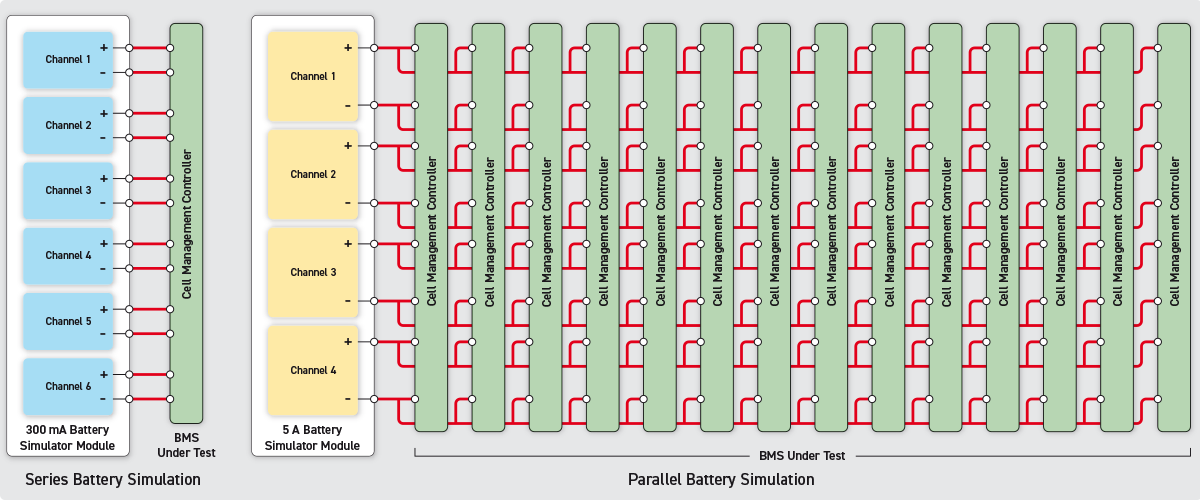
Figure 2 – Above, an example of the hybrid series/parallel technique for battery simulation
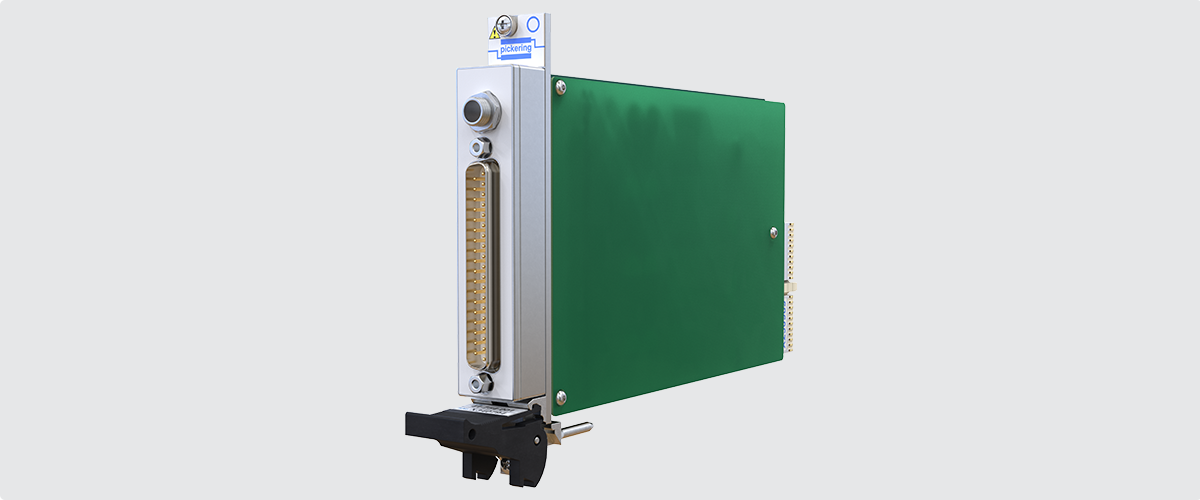
Pickering’s 41/43-754 Multi-Channel 5 A Battery Simulator
Available as a PXI or PXIe Module
- 4 or 2 Power Supplies in a Single Slot
- Voltage & Current Readback
- Independent Sense Connections
- Ideal for Battery Stack Emulation
- 1000 V/750 V Independent Isolation Barriers
- Up to 5 A Output Per Simulator
- Battery Charging Emulation up to 7 W Continuous
- Uses External Power Sources (48 VDC)
- Hardware Shutdown Control
- Drivers Supplied for Windows & Linux, Plus Support for Real-time Systems
Benefits of Hybrid-Testing
This approach provides several key advantages for test engineers and program managers:
- Reduced Hardware Costs: By drastically lowering the required channel count, this approach minimizes CapEx. It allows organizations to build or upgrade to an 800V test system within tighter budget constraints.
- Enhanced Safety: The compliance voltage of the stack can often be kept below the battery pack voltage. This creates a safer test environment, reduces the need for specialized high-voltage personal protective equipment (PPE), and simplifies risk assessments.
- System Reusability: Engineers can often reuse existing 400V test assets, such as lower-voltage cabling, switching, and instrumentation, further reducing the cost of upgrading to 800V test capabilities.
- Smaller Footprint: A lower channel count translates to a smaller, more compact HIL test system, saving valuable lab space.
- Scalability and Flexibility: This modular approach allows test systems to be easily scaled or reconfigured. Engineers can adapt the ratio of series-to-parallel channels to meet the specific requirements of different battery pack architectures or test scenarios.
Implementing BMS Hybrid-Testing with Modular Solutions
Pickering's PXI-based 5A Battery Cell Simulators are designed to facilitate this hybrid-testing strategy. These modules offer up to four channels per single-slot PXI/PXIe card, with each channel capable of sourcing and sinking from an external power supply.
This high current capability enables parallel balancing of multiple battery cells. The modules provide precise control over voltage and current, allowing engineers to simulate battery cells under various conditions, including different chemistries, states of charge, and fault scenarios.
By integrating these high-current simulators with standard PXI low-current battery simulators, temperature sensor simulators, programmable resistor modules, fault insertion modules, automotive communication modules and switching, test engineers can build a flexible, cost-effective and safe HIL system for validating the next generation of high-voltage BMS.
Recommendations for Best Practices
To effectively implement a scalable 800V battery test strategy, organizations should consider the following best practices:
- Adopt a Modular, COTS-Based Commodity Approach: Utilize commercial-off-the-shelf (COTS) components based on open industry standards, such as PXI. This provides greater flexibility, scalability, and long-term value compared to proprietary, turnkey systems.
- Design for Reuse: Structure your test systems into smaller Sub-Systems to maximize the reuse of existing hardware and software components. This minimizes CapEx and allows for more agile responses to changing project requirements.
- Standardize Test Protocols: Align testing methodologies with relevant industry standards, such as ISO 26262 for functional safety, to ensure product reliability and regulatory compliance.
- Invest in Flexible Simulation Tools: Battery cell simulators that offer a wide range of programmable features, including variable current and voltage, ensure your test rig is future-ready and can adapt to evolving battery management technologies.
Conclusion
As the EV industry adopts 800V architectures and pushes beyond, traditional BMS test strategies are no longer sustainable. The cost, complexity, and safety concerns associated with high-channel-count, one-to-one simulation systems demand a new approach.
A hybrid testing methodology that combines series and parallel battery cell simulation offers a practical and effective solution. By leveraging modular, high-current simulators, such as Pickering's 5A PXI modules, test organizations can build scalable, safe, and cost-effective HIL systems. This strategy enables comprehensive validation of 800V+ battery packs while staying within budget, maximizing the reuse of existing assets, and ensuring a safer test environment for engineers.
Learn more about our PXI 5 Amp battery simulator modules


