
Contents
23 Jan 2025 • 15-20 Minutes
When 5V TTL Won’t Do: The Importance of Industrial DIO in Automated Test
The importance of accuracy and reliability in our testing processes cannot be overstated. Our white paper explores how modern Industrial DIO solutions can help you overcome common challenges and improve your testing outcomes.
Introduction
Industrial digital input and output (Digital I/O) modules are integral to many modern test and measurement applications and are designed to work with voltages and currents above 5 V TTL (Transistor-Transistor Logic). These devices are the critical link between various industrial sensors, actuators, and the control systems that manage them, ensuring accurate measurements and reliable test execution. Modern trends are pushing Digital I/O toward even higher voltage requirements due to evolving application demands, especially in industrial, automotive, and power electronics.
“These devices are the critical link between various industrial sensors, actuators, and the control systems that manage them,
ensuring accurate measurements and reliable test execution.”
What is Industrial Digital I/O?
Industrial Digital I/O modules facilitate communication between the higher-voltage digital signals of industrial sensors and actuators in automated test systems. These modules convert physical signals into digital data (and vice versa) to test the quality of devices or communicate with other system components. Industrial Digital I/O plays a vital role in automated testing, especially in automotive, rail, aerospace, and other rugged environments.
Types of Industrial Digital I/O
1. Digital Input (DI): These modules receive digital signals from various sensors (e.g. flow meters, temperature sensors, and proximity probes) and convert them into readable data. They detect the presence or absence of voltage signals, indicating the status of the connected devices. Some modules can compare the digital input against user-defined high and low thresholds to more accurately determine the logic state.
2. Digital Output (DO): These modules send digital signals to actuators (e.g. relays, solenoids, and indicators) to control their operation. They generate the necessary voltage or current to drive the connected devices, executing commands from the test system.
A digital input and output module features channels that can be configured as either a DI, a DO or both simultaneously, with the input stage actively monitoring the state of the connected output.
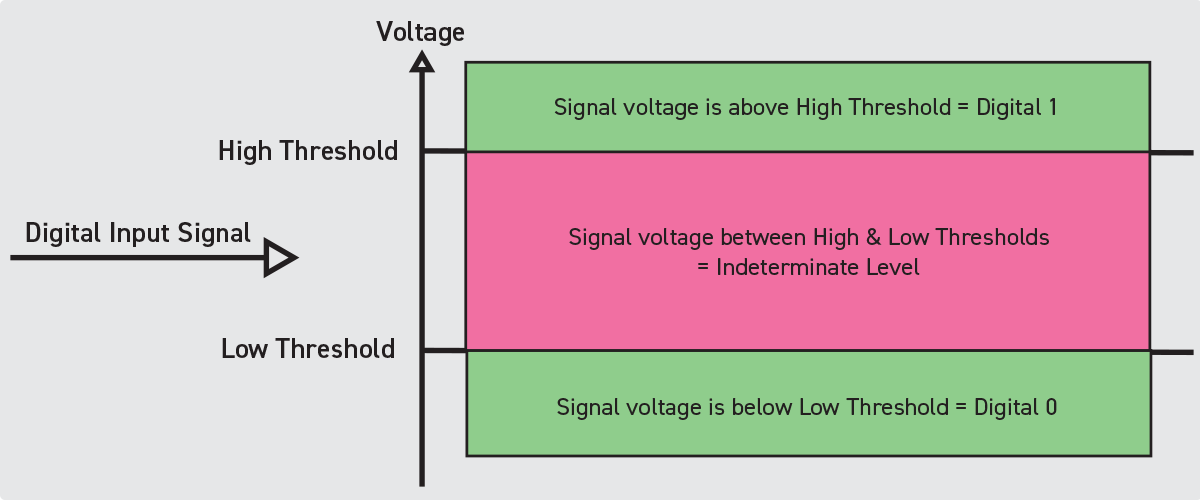
Figure 1 – Digital input signal and threshold diagram
Digital I/O for Test and Measurement
In test and measurement applications, Digital I/O modules are used to simulate real-world conditions and verify the functionality of electronic components and systems. They play a crucial role in:
- Validation and Verification: Identifying design faults and verifying performance by providing precise control over test parameters.
- Environmental Testing: Monitoring and controlling test environments to assess the performance of devices under different conditions.
- Functional Test: In production, Digital I/O signals ensure that electronic devices under test operate correctly by simulating inputs and verifying outputs.
The Growing Need for Industrial Digital I/O
Industrial Digital I/O is increasingly required within modern automated test systems, especially within higher-power electronics production, automotive test, and safety-critical sectors such as aerospace and medical devices, where robust performance is paramount. While traditional 5 V TTL logic remains common, many systems now require higher voltage levels — such as 12 V, 24 V, or even 72 V — to ensure reliability, noise immunity, and long-distance signal transmission. As test systems become more sophisticated, understanding these I/O trends is crucial for ensuring compatibility and optimizing performance.
- Transportation: Automotive systems use 12 V and, more commonly, 24 V logic levels for interfacing with various in-car systems, such as sensors, actuators, and controllers. Due to harsher environments, heavy-duty vehicles and buses typically rely on 24 V, while trains have standardized on 72 V to ensure reliable performance
- Safety-critical systems: Vital electronics with aircraft, medical devices, and building automation systems (i.e. smoke detectors) increasingly rely on higher voltage logic levels to shield from interference and allow for longer cable runs.
- Renewable infrastructure: In photovoltaic systems, the digital control circuits for solar inverters and DC-DC converters must interface with high-voltage components, often up to 48 V.
What to look for in your Digital I/O
Extended Voltage Ranges: Today’s test systems require an extended voltage range — up to 300 volts at times — to allow users to interface with the broader range of higher-voltage sensors and actuators commonly found in industrial applications. The extended range provides greater flexibility and simplifies system design by reducing the need for additional voltage conversion components.
High-Density Configurations: Large-scale PXI- and LXI-based test systems can require hundreds of Digital I/O channels. You should consider compact modular designs that allow for more versatility by providing easy scalability while reducing the overall footprint of the test system, saving valuable space, and enabling more complex testing setups within a smaller area.
Optimizations for Automated Test: Diagnostic Tools: Digital Inputs can effectively function as diagnostic tools by extending voltage ranges and allowing for threshold customization. They can replace traditional digital multi-meters (DMMs) in many functional test scenarios, providing a more integrated and automated solution for verifying signal integrity. This capability simplifies testing processes and reduces the need for additional equipment.
Robust Protection Mechanisms: To reduce the risk of damage and downtime in industrial applications, comprehensive protection mechanisms — such as overvoltage, overcurrent, and thermal overload protection — should be included in your Digital I/O to ensure the reliability and longevity of your modules.
Seamless Integration: As part of the PXI platform, Pickering’s Digital I/O modules seamlessly integrate with other
PXI instruments, providing a cohesive and versatile test environment. This integration allows for synchronized operations
and simplified system management, enhancing the overall efficiency and effectiveness of the test and measurement
setup.
Figure 2 – Pickering Digital I/O Modules in a PXI chassis
Pickering PXI Digital I/O Overview
| Part Number | Product Description | Platform | Channels | Max I (A) | Max V DC | Additional Features |
|---|---|---|---|---|---|---|
| 40-228 | Prototyping card TTL and Open Collector IO | PXI | 32 | 0.5 | 50 | Optional DC-DC Converter |
| 40-410 | Digital I/O TTL and Open Collector IO | PXI | 32 | 0.5 | 50 | |
| 40/42-411A | Relay Driver Module | PXI/PXIe | 64, 48, 32, 16 | 1 | 60 | |
| 40-412 | Digital I/O | PXI | 32 | 0.5 | 50 | Dual programmable I/P thresholds
Serial or Parallel acquisition |
| 40/42-412A | Digital Output | PXI/PXIe | 64, 48, 32, 16 | 0.5 | 50 | |
| 40-413 | Digital I/O, Low and/or High Side Driver | PXI | 32 | 2 | 40 | Dual programmable I/P thresholds |
| 40/42-414 | Digital Input | PXI/PXIe | 128, 96, 64, 32 | ** | 300, 200, 100, 50 | Dual programmable I/P thresholds |
| 40/42-419 | Semi-Dynamic Digital I/O | PXI/PXIe | 64, 48, 32, 16 | 0.3 | 60 | Dynamic 8-bit Pattern Acq/Gen |
| 40-490 | Opto-Isolated Digital I/O | PXI | 32 Out, 16 In | 0.4 | 40 | 6V I/P threshold, DC-DC converter option |
| 40-491 | Opto-Isolated Digital I/O | PXI | 32 Out, 16 In | 0.4 | 40 | TTL I/P threshold, DC-DC converter option |
** Limited by 1 MOhm input impedance
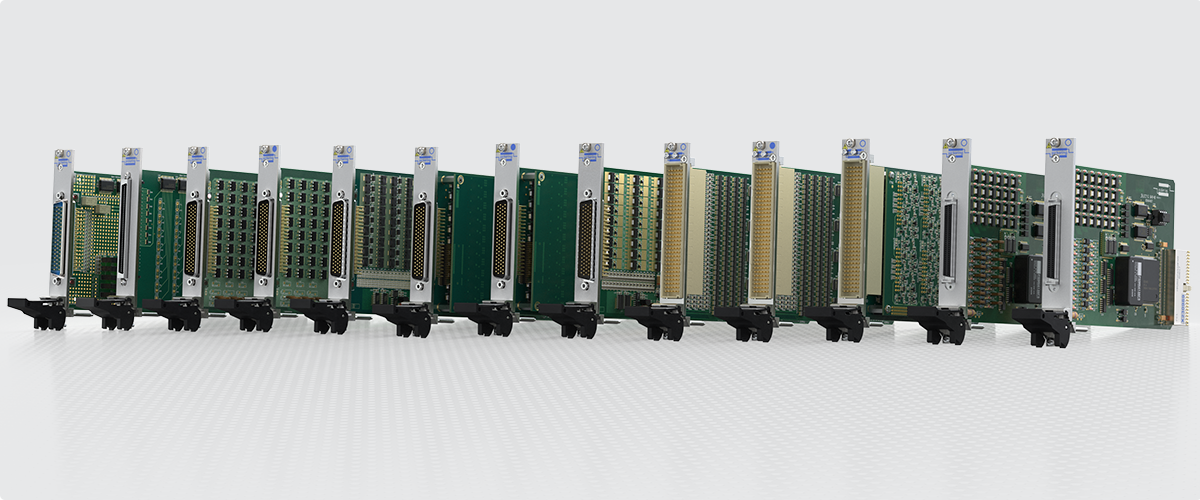
Figure 3 – Pickering Digital I/O family
|
Pickering's broad family of industrial Digital I/O devices for PXI/PXIe offers extended voltage and current ranges and customizable input voltage threshold settings, substantial improvements over alternative solutions. These advancements — including several innovative features that set them apart from existing solutions — offer significant flexibility, accuracy, and functionality benefits. ConclusionIn today’s demanding test environments, engineers need digital I/O solutions that provide flexibility, precision, and durability. Pickering’s industrial Digital I/O modules have evolved to meet these needs by offering extended voltage ranges, high channel density, and customizable threshold settings. These features enable interfacing with various sensors and actuators while delivering reliable performance, even in high-noise or high-voltage environments. For applications in sectors such as automotive, aerospace, and power electronics, these modules are indispensable in functional and environmental testing.
|
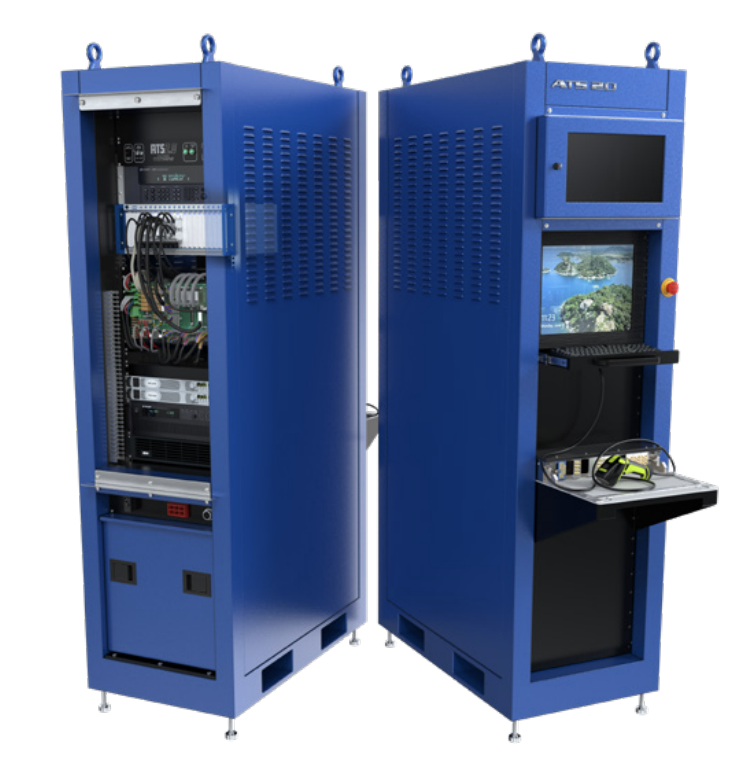
Figure 4 – An example of an automated test system including a Digital I/O chassis |


