
Driving External Loads in a Test System
External loads are common in automated test systems. These loads could be solenoids, external high-power relays, or even microwave relays placed in the RF path in order to avoid loss and VSWR issues.
Driving these external loads can be challenging, for example relay coils can create large voltage transients when the switch is opened (especially if the coil has a faulty back EMF suppression circuit) or high inrush current for capacitive load switching. Test systems have to be able to deal with both working and faulty parts if they are to have a useful life, so when driving external loads it is important to use PXI driver modules that provide protection against both damage to the drivers themselves and the test system. What’s more, test engineers will often want to close the loop to confirm the driven load has the correct voltages present.
Pickering Interfaces has a range of PXI Modules that address this type of application. Each of these modules provides a set of a protection measures:
- A voltage clamp that prevents voltage spikes from damaging the driver. This is particularly useful when driving inductive loads
- A current limit that prevents excessive current from being drawn that might damage power supply systems or limit inrush currents into capacitive loads
- A thermal limit which shuts the driver down if it overheats
This combination of features makes these modules extremely robust and hard to damage by accidental abuse.
Industrial Digital I/O Modules for Driving External Loads
40/42-411A
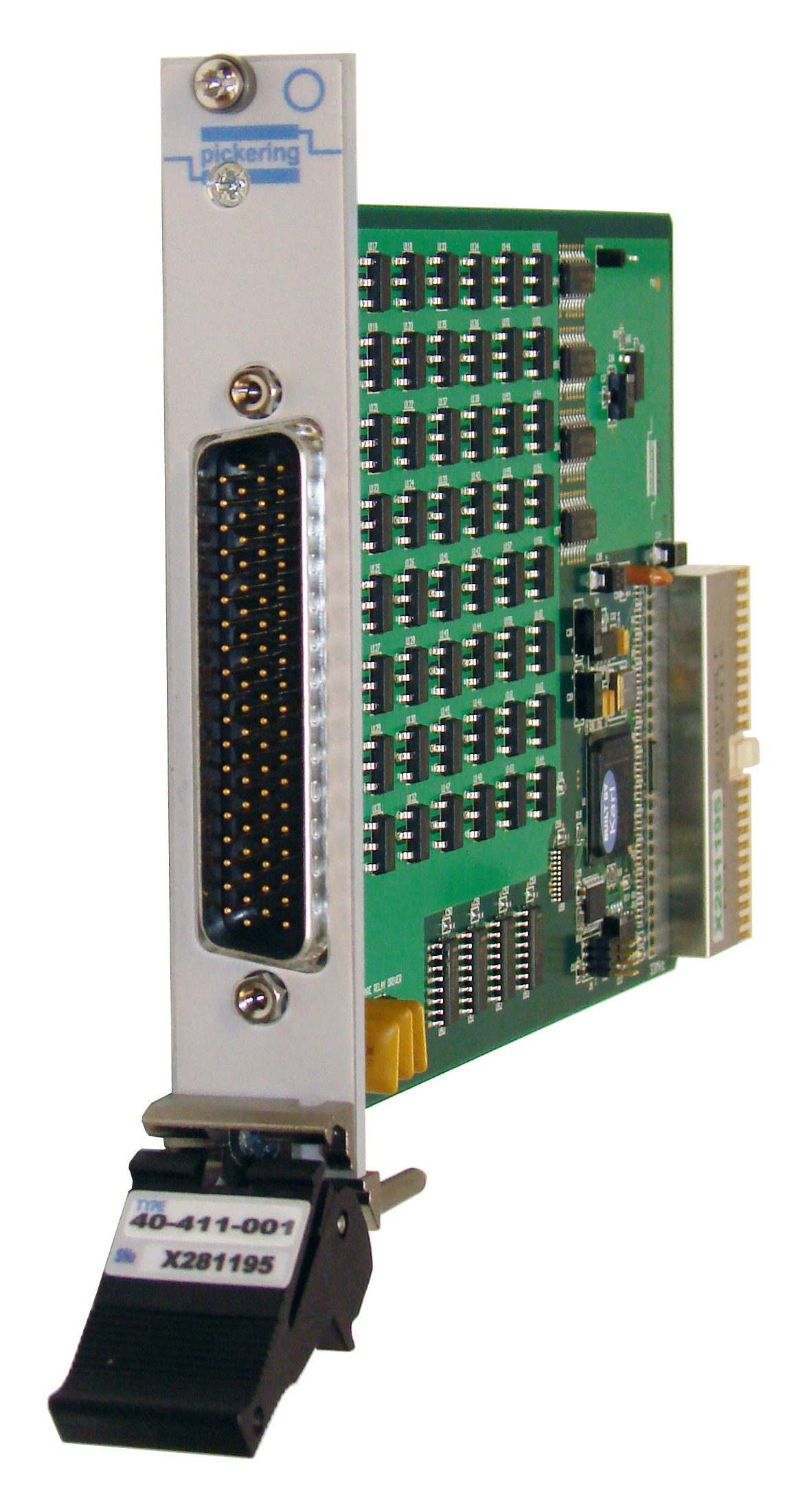
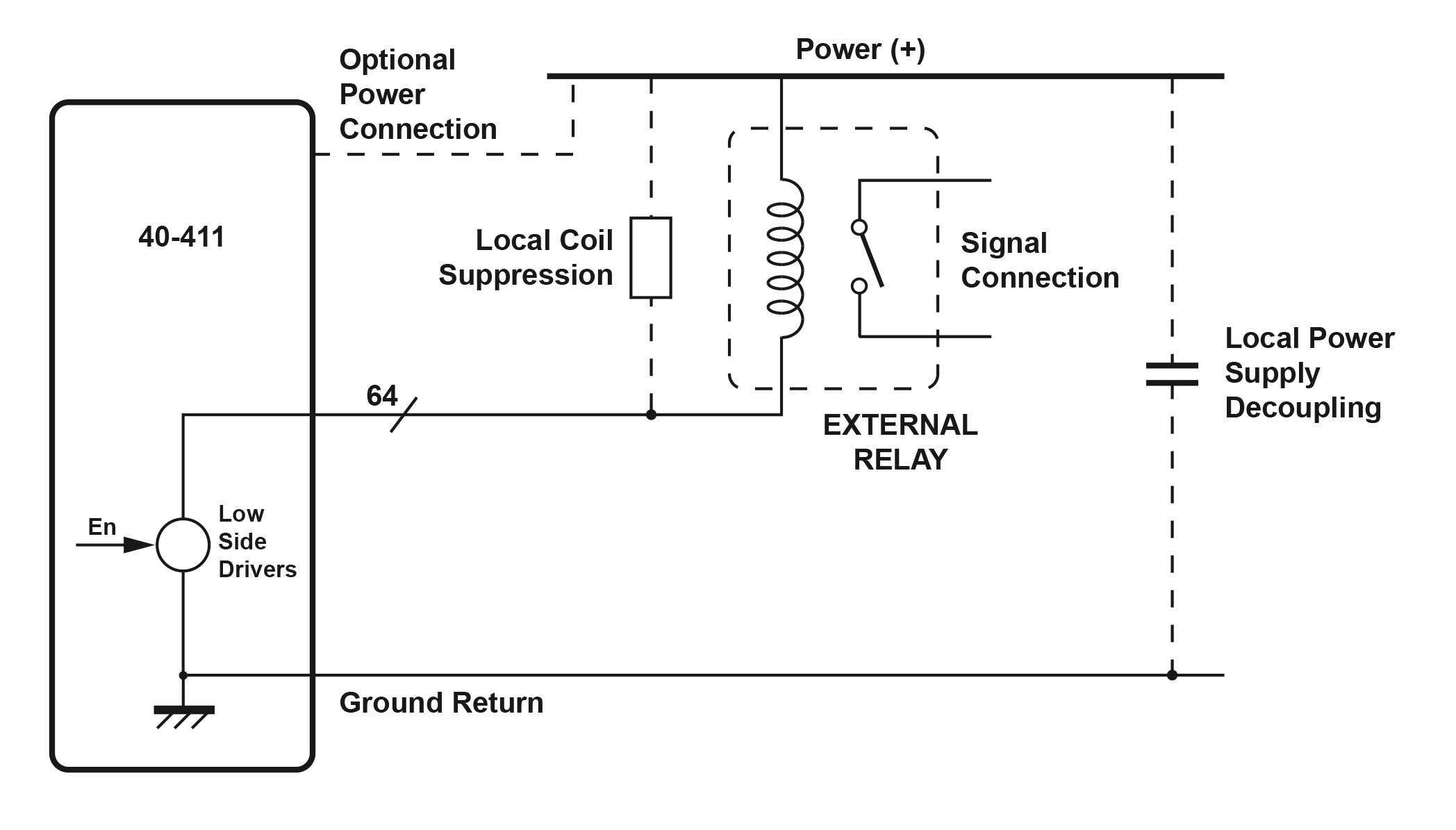
The 40-411A (PXI) and 42-411A (PXIe) provide up to 64 outputs that are designed to connect one terminal of the load to ground. Supporting 1A and up to 60VDC, these modules are capable of driving most external solenoids and relays found in an automated test system.
For example, when driving SP6T microwave relays using an external positive power supply, 10 relays can be supported from a single module. The 40-411 can also be used for driving other microwave relay configurations such as SP8T (8 off) and SPDT.
40-412
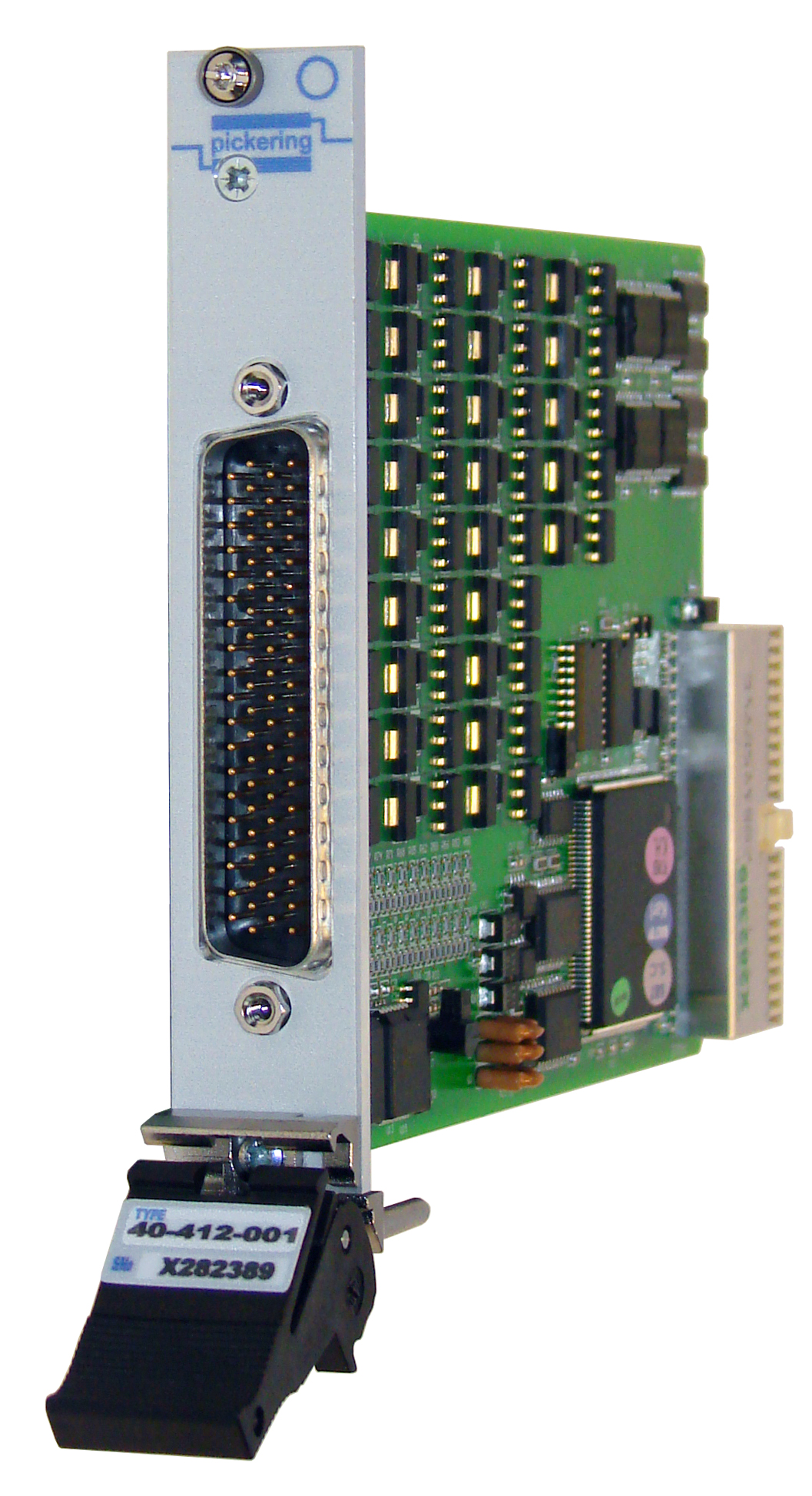

The 40-412 supports 32 output channels and unlike the 40-411 has the capability of switching loads to either the supply or to ground. In addition the module has 32 digital input lines can be used to check whether the voltage is below or above two voltage thresholds, each of which can be programmed by the user. In this case the module could for example drive 5 off SP6T microwave relays from a single slot, but can also check the coil drives being driven correctly.
In industrial control systems it is common for users to drive loads from say a 24V load and to be able to check the load voltage is either below 20% of supply voltage or above 80% of supply voltage. The 40-412 provides an elegant facility for doing this by simply reading back the status of the digital inputs having set the dual thresholds appropriately.
Two designs of readback are provided, one based on a fast parallel read or one based on a slower serialread, the former being more expensive than the latter. To find out more on this topic see 40-412 Readback Operating Speed
Like the 40-411 the design is fully protected and with output ratings of 0.4A is able to deal with most loads up to 50V.
It can also be used for driving Microwave Relays and the readback facility used to ensure the external relay coil is
correctly driven.
40-413
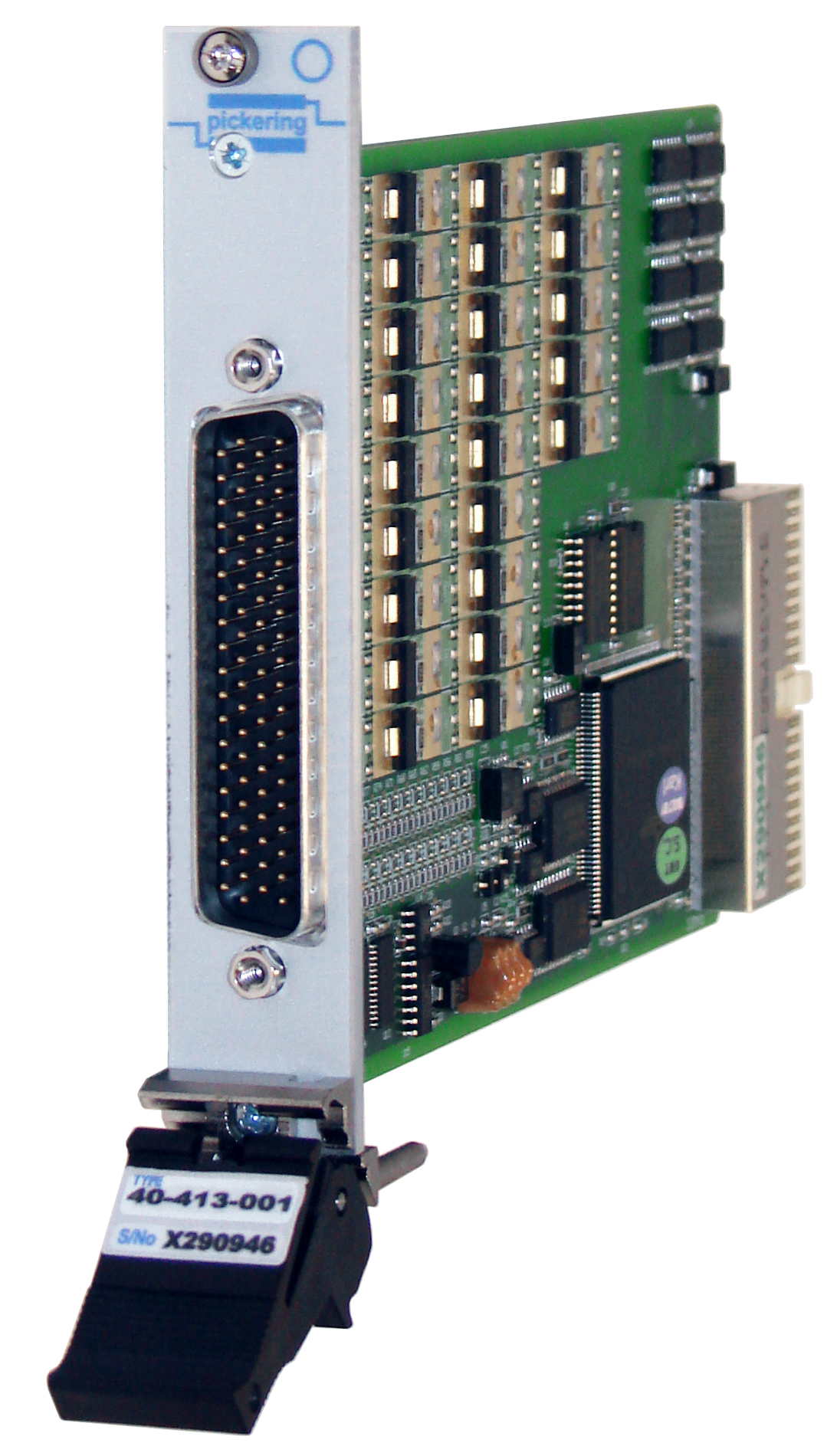
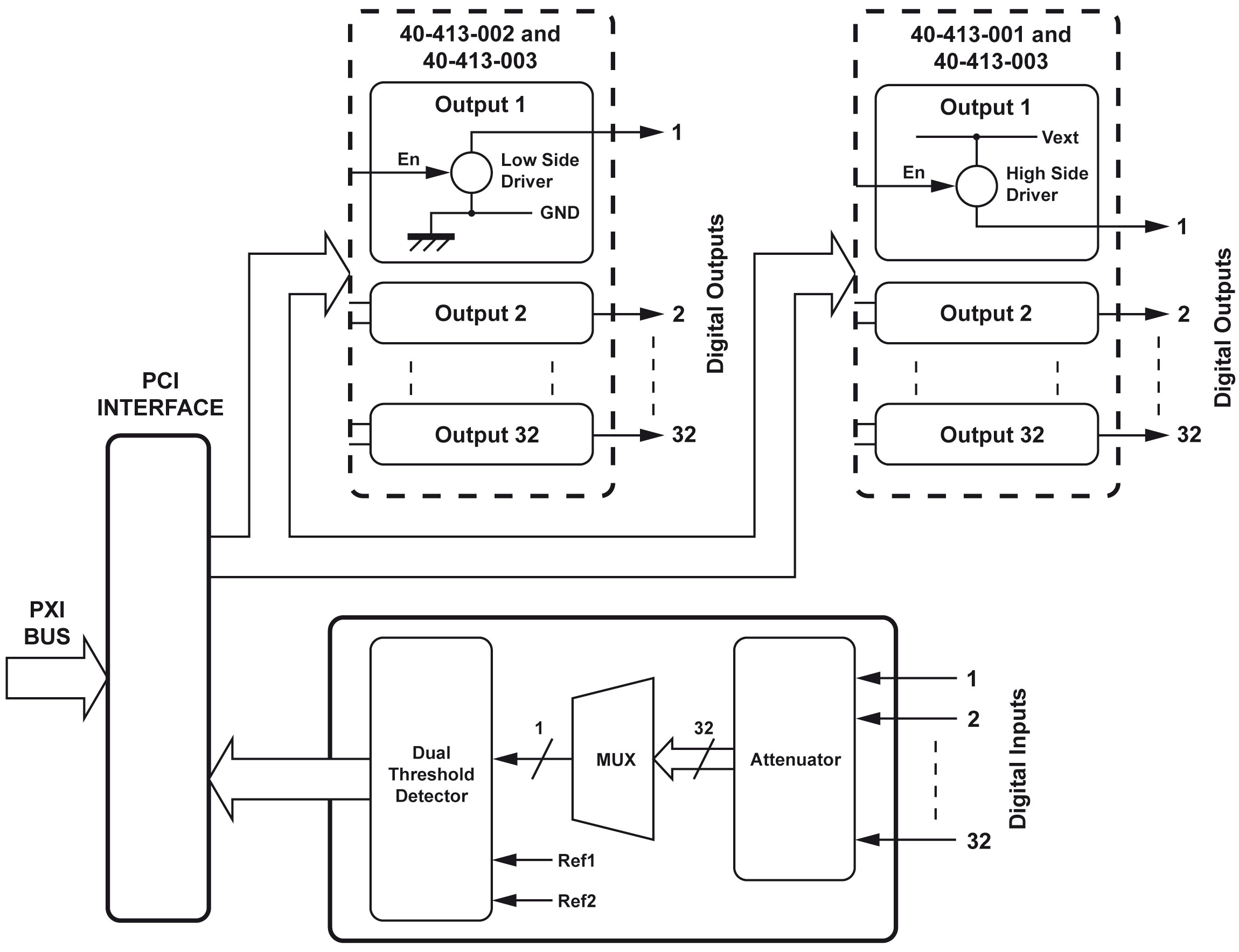
The 40-413 is similar to the 40-412 in offering 32 channels of output and 32 channels of read back, its main difference is that it handles higher current of 2A at voltages up 40V. It is therefore capable of driving much larger loads.
The input read back function provides a serial read back against two threshold voltages in a similar way to 40-412.
LXI Solutions
Beyond standard PXI chassis, it should be remembered that these PXI digital I/O modules can also be used in all Pickering LXI chassis for systems using Ethernet.

