

Equipment used in medical diagnostics, procedures, and treatment, as well as implantable devices such as pacemakers, must comply with industry standards and strict regulations to assure patient safety, device interoperability, and electromagnetic compatibility. In this article, we discuss how employing hardware-in-the-loop (HIL) simulation techniques can help those developing electronic medical products achieve compliance more effectively.
Compliance standards exist for several reasons. First and foremost, they are designed to ensure that devices function safely under normal and foreseeable misuse and fault conditions. For example, X-ray equipment that exceeds safe radiation limits can cause tissue damage and increase cancer risk for the patient. As for implantable devices, if they are susceptible to electromagnetic interference (EMI) this might result in the user suffering a fatal arrhythmia. The same situation can arise if the pacemaker’s resilience to cyberattack is low.
There are many standards and regulations within the medical sector that share common goals, plus some have application-specific use cases. For example:
- The IEC 60601 series of standards define basic safety and essential performance requirements for medical electrical equipment and systems.
- IEC 60601-1-2 defines Electromagnetic Compatibility (EMC) requirements that draw on the generic IEC 61000 standards.
- Implantable devices must comply with ISO 14971, the international standard for risk management of medical devices.
There are also regional/national regulations that apply to medical equipment. For instance, in the US, Food and Drug Administration (FDA) approval is a rigid requirement, and non-compliance can result in product recalls, lawsuits, fines, and even criminal liability for manufacturers. Indeed, it was recently reported that the FDA averages 2,500 product recalls per year in the US. Of the reasons for recall, the use of non-conforming materials, software problems, and device design issues accounted for almost half.
In addition, standards have emerged in recent years that relate to cybersecurity and data protection. For instance, IEC 81001-5-1 and FDA’s premarket guidance address cyber threats, especially in wireless pacemakers and insulin pumps as well as remote-controlled imaging systems. Compliance protects not only device functionality but also patient data and privacy.
HIL Testing
Hardware-in-the-loop simulation is a powerful method for fast tracking the development and validation of all kinds of electronic products, systems, and equipment, and is essential for validating the functionality of embedded software in electronic control units. It involves connecting real hardware, such as power supplies and sensors, to the device under test (DUT) and simulating the environment under which it will operate, i.e., mimicking real-world conditions, physiological systems, and patient inputs.
A key aspect of this ‘mimicking’ is the use of mathematical models of heart rhythms and tissue resistance, for example. It also allows safe testing under critical conditions, where the tests can (and should) include simulated fault conditions that would be dangerous to produce in real life.
Moreover, all tests can be scripted (automated), the results captured, and the process is highly repeatable. For these compelling reasons, IEC 60601 specifically mentions HIL:
- Clause 4: General Requirements for Testing (HIL offers repeatability and reproducibility)
- Clause 14: Programmable Electrical Medical Systems (software validation via HIL)
- Clause 17: Electromagnetic Compatibility (simulate noise and assess device reaction)
As mentioned, implantable devices must comply with ISO 14971. A HIL test use case when developing/validating a pacemaker would be:
- Simulate cardiac signals and pathological conditions (e.g., arrhythmias) to validate pacemaker response.
- Emulate the body environment (tissue impedance, temperature, and physiological noise).
- Inject signal anomalies or interferences (e.g., EMI, static discharge).
- Verify real-time firmware updates or watchdog behaviors.
- Test ‘fail-safes’ designed against battery depletion, lead disconnection, or incorrect signal detection.
Also, but not necessarily required for compliance, long-term use scenarios can be simulated, i.e. the DUT can be subjected to highly accelerated life testing (HALT), using extremes of temperature and vibration to force failures in days rather than waiting years in the field.
The compliance support HIL provides includes:
- Risk analysis through simulated failure modes and hazards (including cyber).
- Risk evaluation through measuring the likelihood and severity of all foreseeable risks.
- Risk control through testing the effectiveness of all risk mitigations measures (e.g., alarms, triggers and fallback modes) designed into the product/system/equipment.
HIL Requirements
The HIL environment (see figure 1) effectively provides a bridge between simulation models and real hardware to exercise the DUT and record results under realistic, controlled, and repeatable conditions.
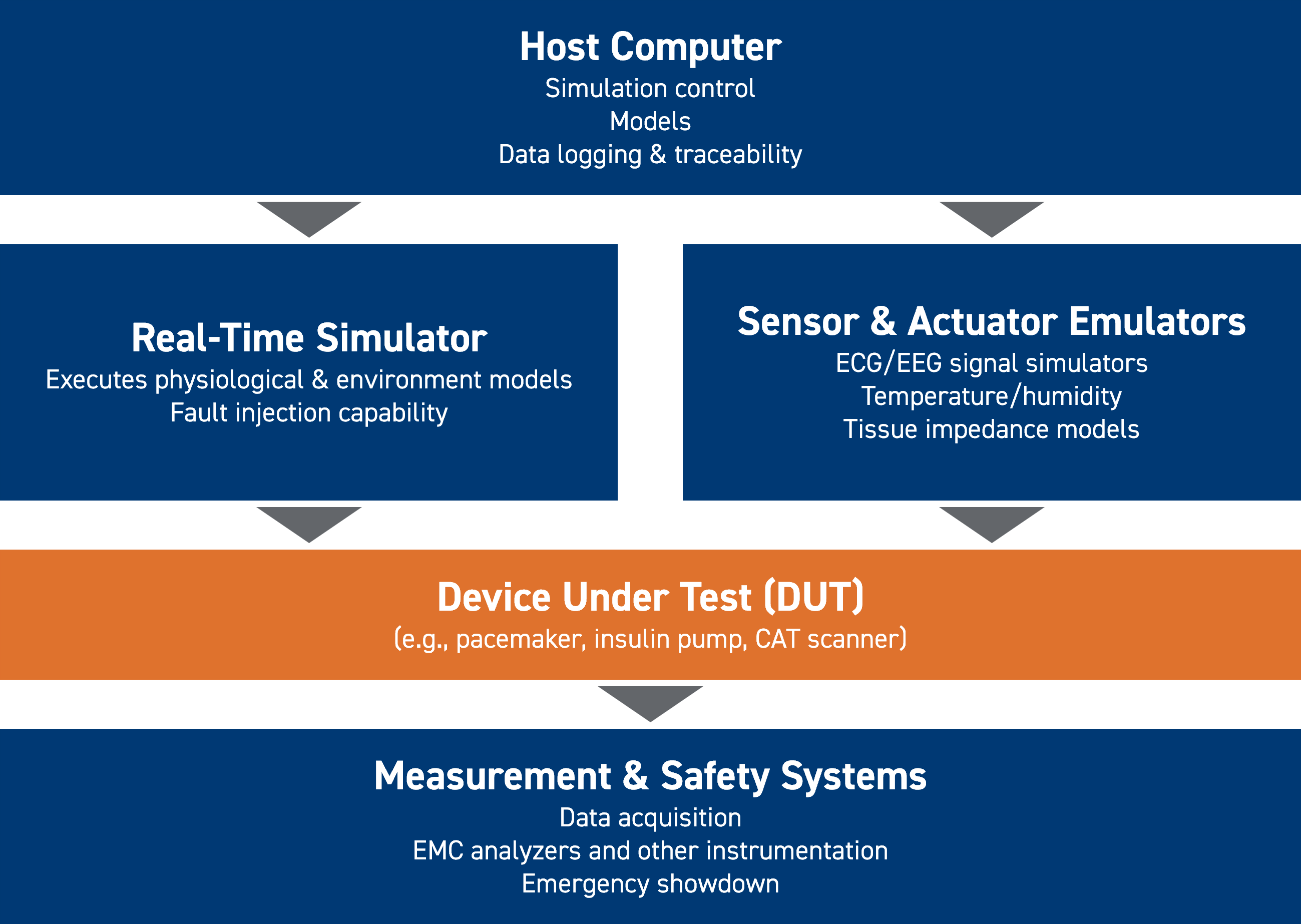
Figure 1. HIL integrates real hardware, physiological simulations, and monitoring systems to verify safety, performance, and regulatory compliance.
For the medical sector, the environment must not only support technical development and verification but also maintain compliance, traceability and data integrity throughout the design lifecycle. The following sections outline what is needed to create the HIL environment for the DUT:
Host Computer System. This manages the entire HIL simulation and serves as the primary interface for developers, testers, and compliance teams. Requirements include:- A high-performance workstation or server capable of real-time data processing and deterministic timing.
- HIL control and simulation software. o Model integration software/tools.
- Version control and traceability software for regulatory documentation and change control.
- Cybersecurity features.
Simulation Hardware. Its purpose is to emulate the operational environment and interfacing sensors/actuators that the medical device would experience in clinical use. The hardware must:
- Be able to operate in real time and in a deterministic manner.
- Include analog and digital I/O modules to interface with the DUT (voltage, current, PWM, serial buses, etc.).
- Replicate sensor behavior accurately (e.g., scaling, noise, impedance).
- Have safety and isolation circuits to prevent unintended feedback or electrical hazards.
Sensor and Actuator Emulation. This is needed to replicate biological signals and environmental interactions in a safe and repeatable way. Examples include:
- Physiological signal simulators such as ECG, EEG, EMG, SpO₂, or blood pressure waveform generators.
- Environmental sensor simulators for temperature, humidity, motion, mechanical pressure, etc.
- Patient simulators / phantoms for imaging or therapy systems (e.g., ultrasound or radiation dose calibration).
Note, for compliance purposes it is essential to use calibrated hardware and traceable signal sources (to ISO/IEC 17025, for instance) for all validation activities and to ensure reproducibility and documentation of simulated inputs for regulatory submissions.
System Models and Simulation Software. These provide mathematical models of human physiology, mechanical systems, or clinical environments to drive the HIL simulation. Model types include:
- Physiological models that simulate cardiovascular, respiratory, or neurological functions.
- Device interaction models that simulate load and feedback (e.g., pump flow resistance, in the case of an insulin pump).
- Fault and disturbance models that introduce controlled faults to test alarm and safety response mechanisms.
Note, for development and compliance purposes, all models should be validated and traceable according to IEC 62304 (software lifecycle) and ISO 14971 (risk management). It is important to maintain full documentation of model assumptions, limitations, and validation results.
Measurement, Monitoring, and Safety Infrastructure. This ensures safe operation, accurate testing, and compliance traceability. Components include:
- Data acquisition and analysis tools for performance and safety verification.
- Compliance test equipment such as EMC analyzers and leakage current testers.
- Electrical isolation and medical-grade power supplies per IEC 60601-1.
- Safety interlocks and emergency stops for operator and equipment protection.
Note, for regulatory purposes, the above equipment must be suitable for use in recognized test procedures - and support the creation of audit-ready documentation – that require [test] coverage mapping for compliance with IEC 60601, IEC 62304, ISO 14971, and FDA 21 CFR 820/11, for example.
Network and Interface Simulation. This is needed to emulate communication pathways between the DUT and external systems in a medical environment. Examples include:
- Ethernet, USB, I²C, SPI, BLE, and Wi-Fi interface simulation.
- Hospital network emulation for interoperability testing under IEC 80001-1.
- Cybersecurity testing under FDA premarket guidance for medical device security.
Validation and Compliance Support Framework. This is to ensure the HIL tests directly support regulatory approval and quality system requirements. It includes:
- Automated test scripts with traceability to requirements and risk controls.
- Electronic records and audit trails (21 CFR Part 11 compliance).
- Documented validation of the HIL test environment itself (per GAMP 5, IEC 62304, and ISO 13485).
The Criticality of Signal Paths in HIL Systems
The fidelity of these pathways (see Figure 2) governs the validity and reliability of the entire testing paradigm. For example, physiological signals often have low amplitudes and high sensitivity. Accordingly, maintaining signal integrity is a regulatory imperative as any distortion or noise introduced along the path from signal sources to the DUT, or from the DUT to instrumentation, can fundamentally compromise test results.
Distortion can arise through impedance mismatches and (frequency) attenuation issues, and noise can be generated through electromagnetic interference (EMI – signal crosstalk, for instance). Careful impedance matching, signal routing, termination and robust shielding all help prevent spurious responses from the DUT that could mask critical safety flaws.
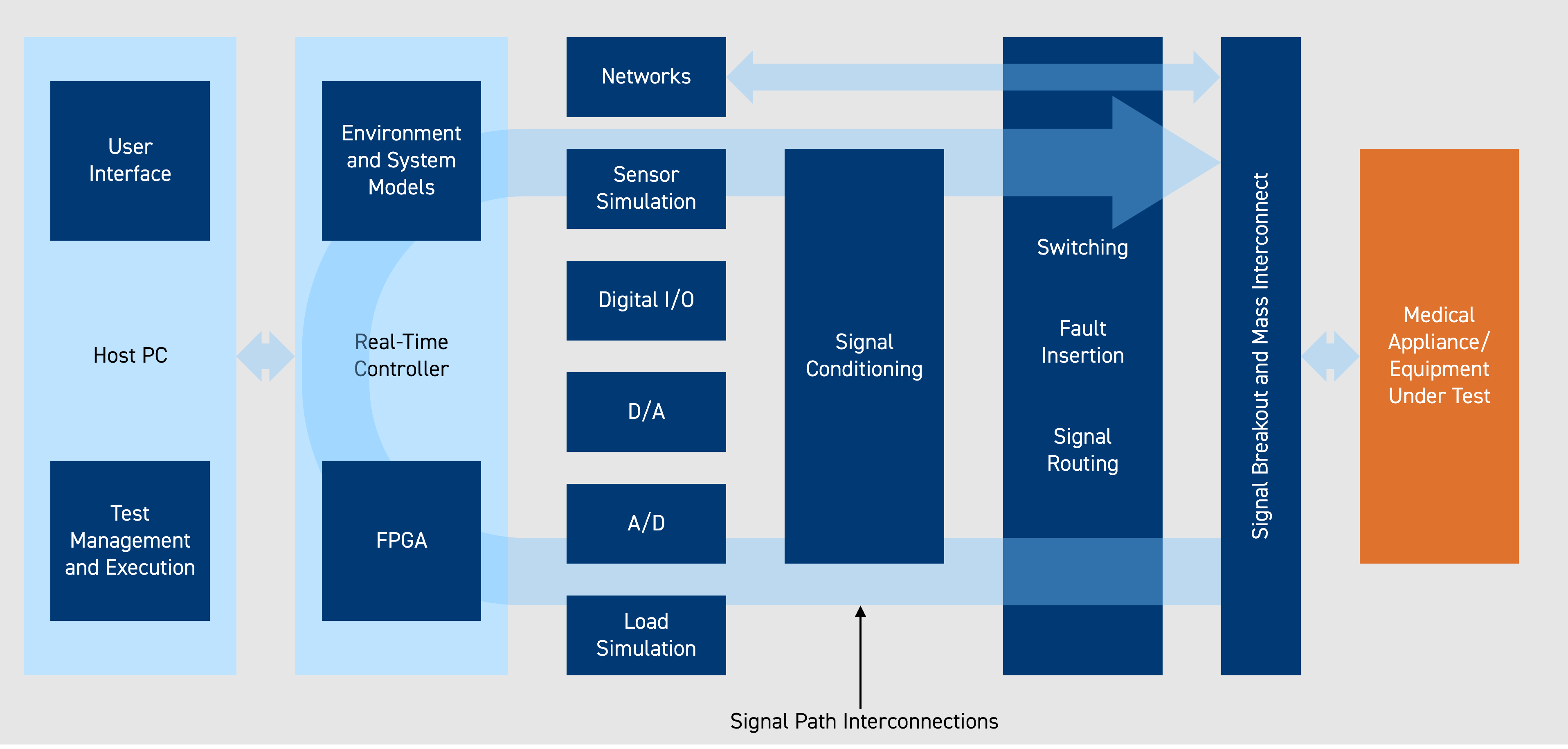
Figure 2. The robustness of signal paths is not merely a design consideration but a foundational requirement for accurate, safe, and compliant medical device HIL testing. Also of great importance is signal breakout – which provides access to all the signals between the DUT and the HIL environment.
Minimal and deterministic latency is of great importance too, as the HIL system must operate in real-time to accurately mimic certain biological processes in which even microsecond discrepancies can have significant implications. Any delay between a simulated event and the DUT’s response must be minimal and predictable. Excessive delays or non-deterministic latency can lead to inaccurate timing of critical events and therefore the misinterpretation of device behavior.
Top-Level Design Considerations
A HIL system acts as a bridge between international standards (themselves operating under a regulatory framework) and achieving everything necessary for compliance. See Figure 3.
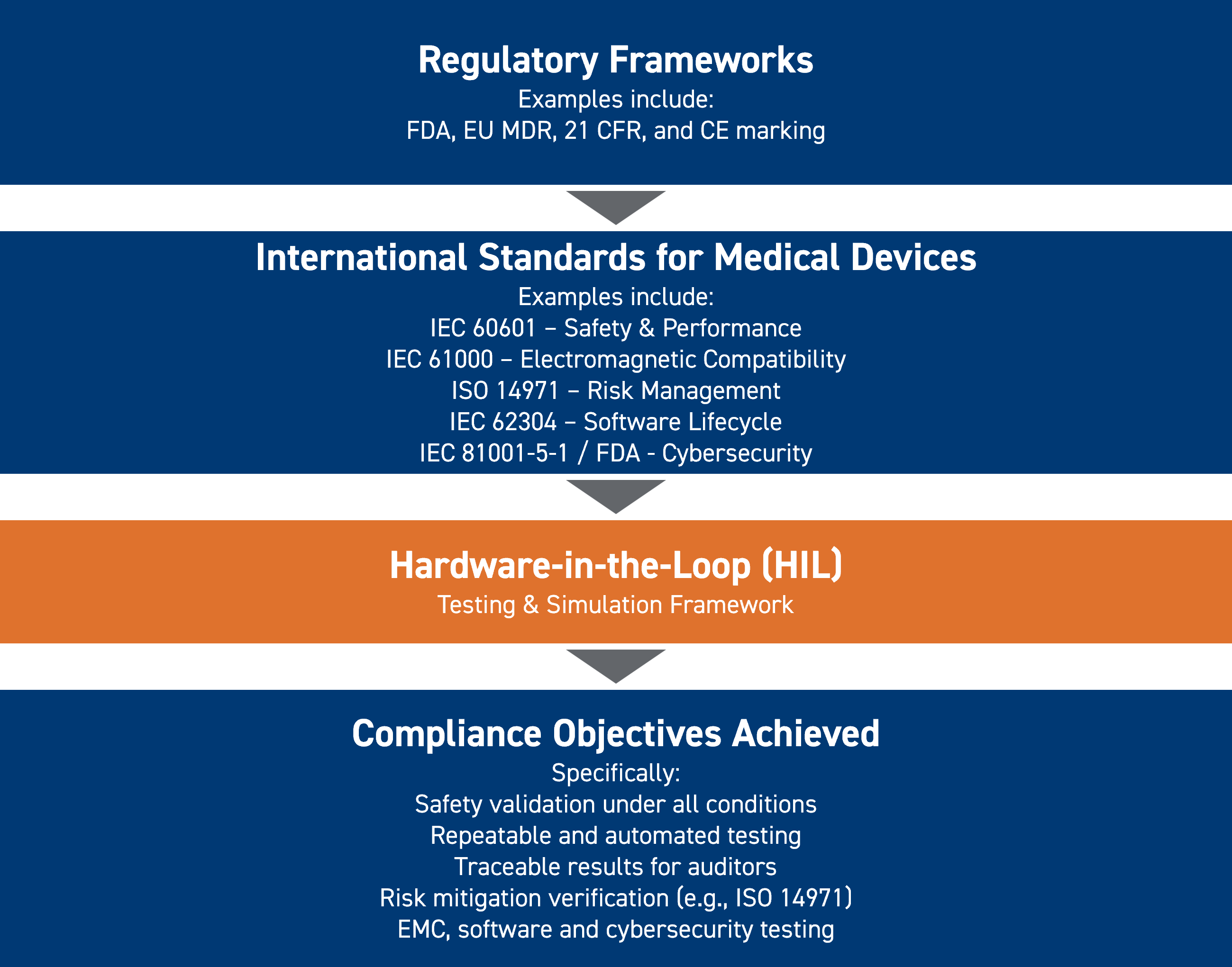
Figure 3. HIL acts as a bridge between regulatory standards and practical verification, supporting full-lifecycle compliance.
As discussed above, the HIL system must meet many diverse requirements, and it is critical for medical system test engineers to select the most effective platform when designing a HIL system. These systems usually start small and grow in functionality to handle additional testing requirements and increased device complexity, and it is therefore critical that the system is fundamentally flexible and scalable. Open, industry-standard modular platforms such as PXI and LXI offer many advantages over closed, single-vendor proprietary systems, as they enable seamless integration of best-in-class test functionality from multiple vendors, along with comprehensive global third-party support and guaranteed longevity.
It is also imperative to fully map and evaluate all the signal paths of the HIL system early in the design. These pathways are the nervous system of the entire HIL test environment, and their performance is critical to its overall accuracy, flexibility, and ease of use.
Summary
HIL testing is an indispensable methodology for medical device manufacturers navigating the complex landscape of regulatory compliance. By bridging the gap between theoretical simulation and real-world hardware, HIL systems offer a robust platform for accelerated development, comprehensive validation, and significant risk reduction. Also, the ability to simulate diverse physiological conditions, introduce fault scenarios safely, and ensure repeatable, traceable testing is paramount for meeting stringent standards such as IEC 60601 and ISO 14971.
Discover more about medical device testing solutions here.
Or contact us to learn how Pickering's switching and simulation solutions can help optimize your medical device test systems.

