PXI & PXIe Controllers
A PXI controller is the hardware component that manages a PXI or PXIe chassis, running the operating system and test software that commands every module installed in the system.
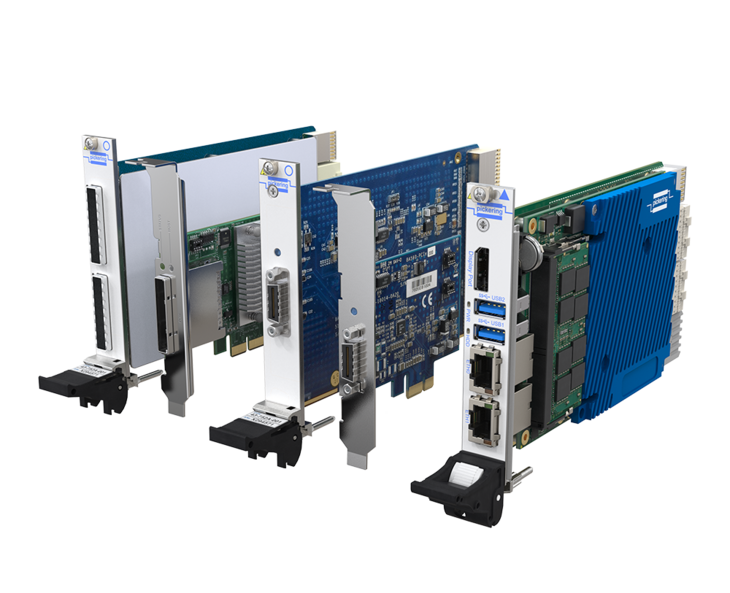
Every PXI(e) chassis requires a controller in Slot 1 to operate. You have two options: an embedded controller, which is a compact high-performance computer that slots directly into a PXIe chassis, or a remote controller kit, which connects a PXI or PXIe chassis to a PCIe card in an external desktop, rack-mount, or server PC via a cabled connection. Both approaches give full access to the PCI or PCIe buses, so modules in the chassis appear to the operating system exactly as they would if installed directly in a PC.
Choosing between embedded and remote control depends on your system's footprint requirements, budget, data throughput needs, and how the test system fits into your lab or production environment.
Choosing the Right Controller
Use the comparison below as a starting point when deciding between embedded and remote control for your application.
| Consideration | Embedded Controller | Remote Controller |
|---|---|---|
| Footprint | Self-contained, no external PC needed | Requires a separate host computer |
| Portability | Better suited to compact or mobile setups | Depends on host computer location |
| Processing Power | Fixed to the controller's specification | Scales with the host computer |
| Multi-chassis Control | Limited to the chassis it's installed in | Can control multiple chassis from one host |
| Typical Use Case | High performance or space-constrained systems | Lab, production, or multi-chassis systems |
If your test system needs to control several chassis simultaneously, or you already have a dedicated computer available, a remote controller is usually the more cost-effective route. If you need a complete, independent system in a single enclosure, an embedded controller removes the need for additional hardware.
Software and System Compatibility
All Pickering PXI(e) controllers support Windows and Linux operating systems, along with the VISA and IVI driver standards used across the PXI ecosystem. This ensures your controller works with modules from any PXISA member, not just Pickering's own PXI switching and simulation range. When planning a PXIe system configuration, confirm that your chosen remote controller's PCIe generation and lane count match your chassis backplane to avoid bottlenecks in data transfer rates.
Plan Your Test System
Selecting a controller is just one part of building a reliable test system. Our Test System Architect tool brings chassis, controller, module, and cable selection into a single workflow, helping you visualize your complete signal path before you commit to hardware.
Not sure which controller fits your application? Try our Product Selector, or contact our applications engineering team for guidance tailored to your test requirements.